
In a planted aquarium, lighting, CO₂, and nutrients work best when they are planned together. Keep the photoperiod* stable, align carbon supply with the light period, match nutrients to the demand you are creating, and protect livestock limits. Tools that help you see and review those routines in one place make coordination easier - without taking responsibility away from you.
*photoperiod = lighting schedule
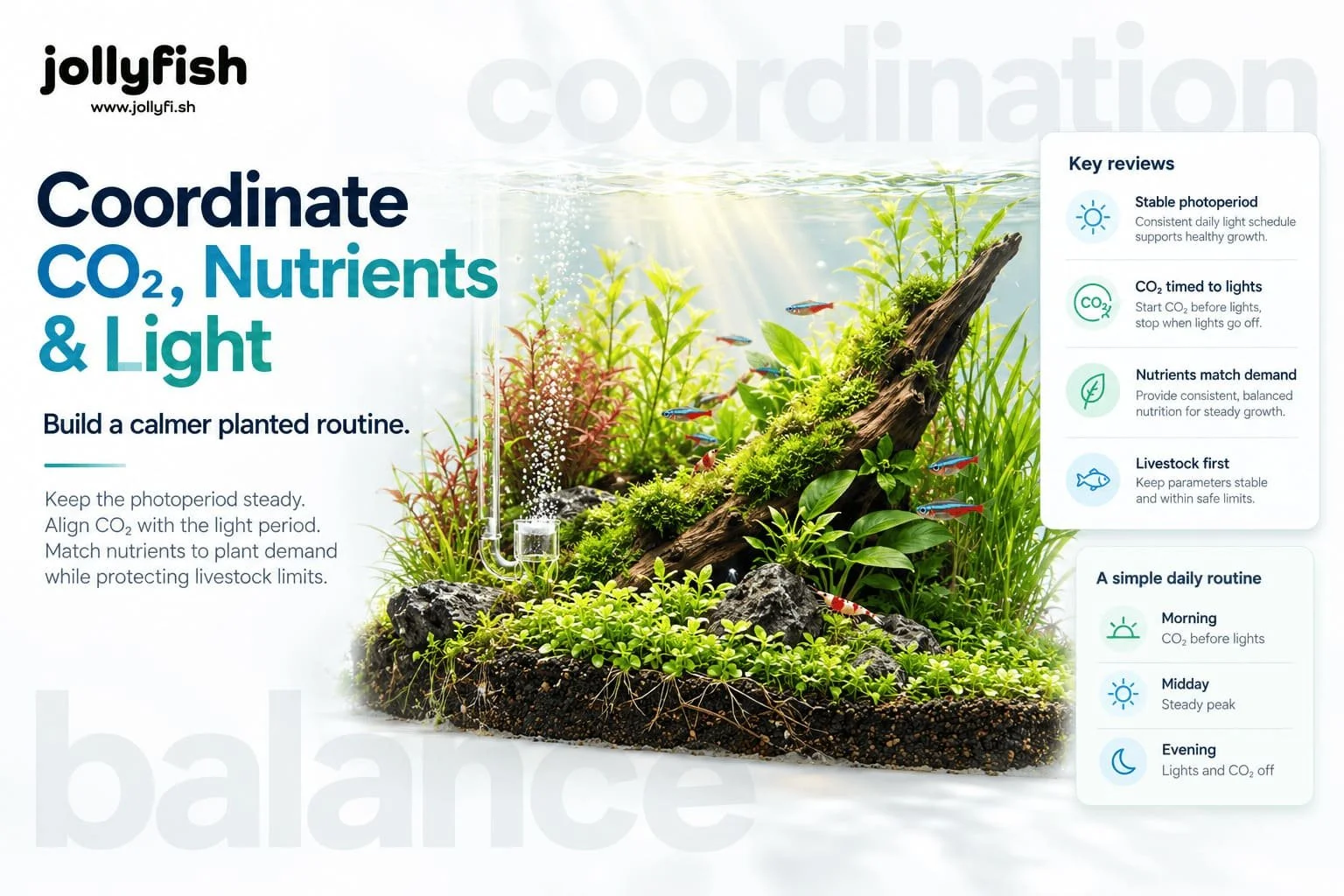
Planted aquariums ask more of the keeper than a basic community tank. Lighting, nutrients, and carbon supply all matter more. They rarely work well when managed as three separate jobs.
The most useful mindset is coordination, not chasing one variable at a time.
Why single changes often disappoint
It is tempting to fix one thing in isolation:
Plants look slow: Increase the light
Growth looks weak: Add more liquid fertilisers
Tank looks flat: Drastically adjust the CO₂ regulator
In practice, light, carbon, and nutrients influence one another. More light increases what plants can demand from the rest of the system. If carbon or nutrients cannot keep up, the result is often imbalance rather than better growth. That is why “turn the light up” is never a complete answer on its own.
Questions to ask before changing anything
Lighting consistency: Are the lights consistent day to day?
CO₂ alignment: Is the CO₂ injection timed correctly with the light period?
Nutrient matching: Is the nutrient routine matched to what plants demand under that light?
Livestock safety: Would a plant-focused change move conditions away from what fish and shrimp tolerate?
A simple example schedule
(non-prescriptive)
Every tank is different. Use this timeline as a starting pattern to review, not a fixed recipe.
| Time Period | Lighting State | CO₂ Solenoid State | Nutrients & Husbandry Notes |
|---|---|---|---|
| Morning (Pre-Light) | Off (or soft ramp if supported) | CO₂ ON (1–1.5 hrs before lights) | Allows dissolved CO₂ to reach target before photosynthesis starts |
| Midday (Photoperiod) | Lights ON (Steady peak) | CO₂ ON (Running steady) | Follow regular fertiliser plan; observe drop checker colour |
| Late Afternoon | Lights ON (Winding down) | CO₂ OFF (1 hr before lights out) | Residual CO₂ suffices; conserves gas and protects livestock |
| Evening & Night | Lights OFF (Dark cycle) | CO₂ OFF | Plants consume oxygen; ensure surface agitation is healthy |
| Weekly Routine | Keep photoperiod steady | Check working pressure | Perform routine water change and review plant leaf margins |
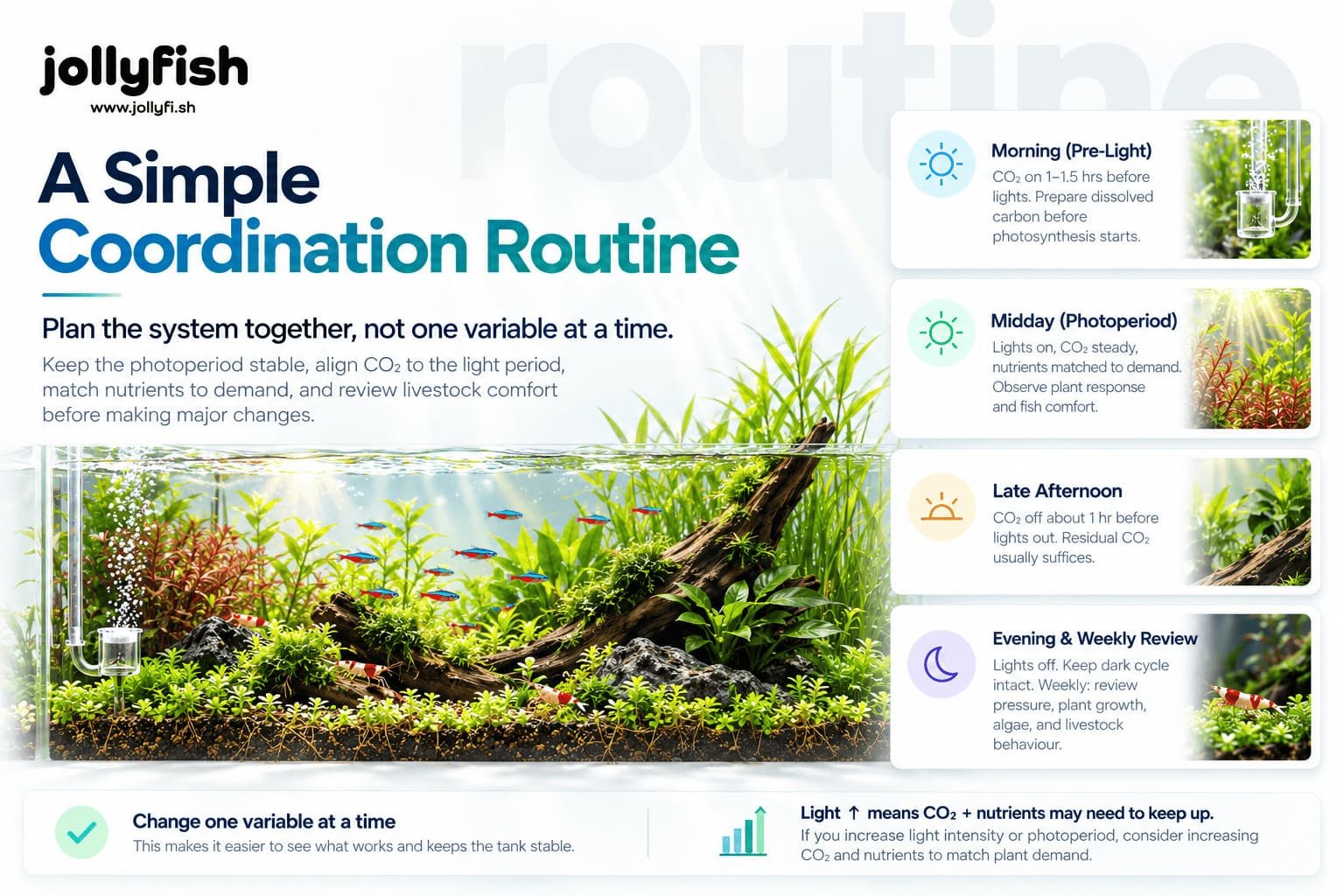
Important: Change one variable at a time when possible. If you change light hours, CO₂, and fertiliser together, you will not know what actually helped or harmed the tank.
How a connected controller helps planted routines
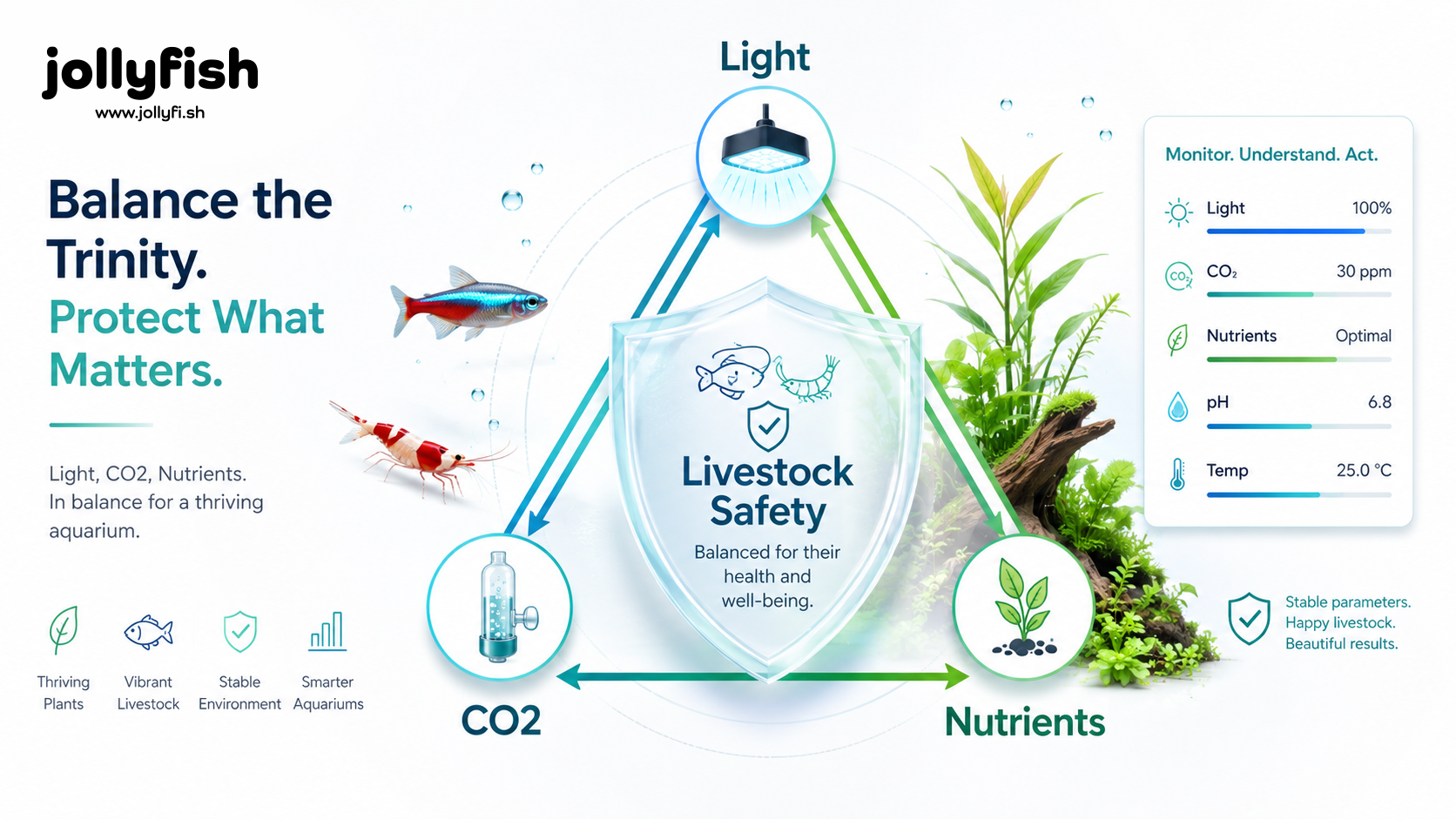
Keep your tank within controls
Planted-tank keepers often need more than another plug timer. They need a clearer way to line routines up and review them together.
AquaMaestro Lite:App-based heating and lighting schedules with included temperature probe
Species & Plant Guidance:Review recommended ranges for selected aquatic flora and fauna
Modular expansion:Plus/Pro paths add supported liquid dosing and CO₂ hardware coordination
What coordination is not
No growth guarantee:It is not a guarantee of instant plant perfection
No substitute:It is not a substitute for observing plant tips, stems, and fish respiration
Livestock priority:Never ignore fish and invertebrate tolerances when optimising for plants
A calmer planted tank usually comes from consistent, reviewable routines — not from aggressive changes made all at once. Learn more about light management in How to Build a Better Aquarium Lighting Schedule.