
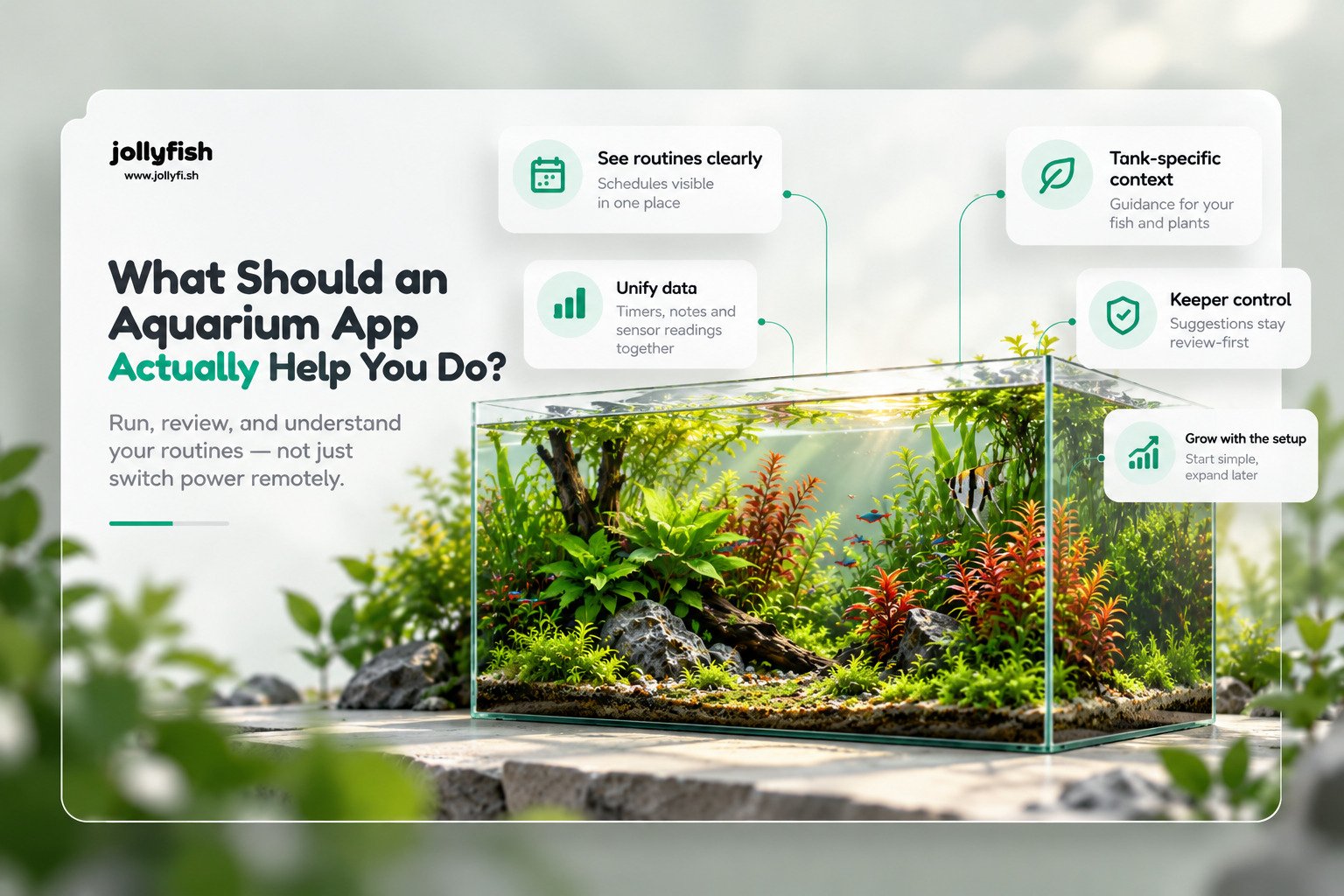
A good aquarium app should help you run, review, and understand your routines - not only act as a remote switch.
The best aquarium control app experiences make schedules visible, support basic aquarium monitoring context where sensors exist, and keep sensitive decisions with you.
Many products are called an aquarium app when they mainly offer remote power control. That can be useful. It is rarely enough for daily care.
What should an aquarium app actually do? (5 criteria)
See routines clearly: A useful app makes schedules visible in one place rather than hidden in background menus
Unify scattered data: Brings timers, notes, and sensor readings together into actionable insights
Add tank-specific context: Interprets numbers for the actual fish and plants you keep via Species & Plant Guidance
Respect advice vs. action: Keeps sensitive decisions with you - providing suggestions rather than unreviewed changes
Grow with the setup: Adapts smoothly from basic lighting schedules to advanced dosing and probe monitoring
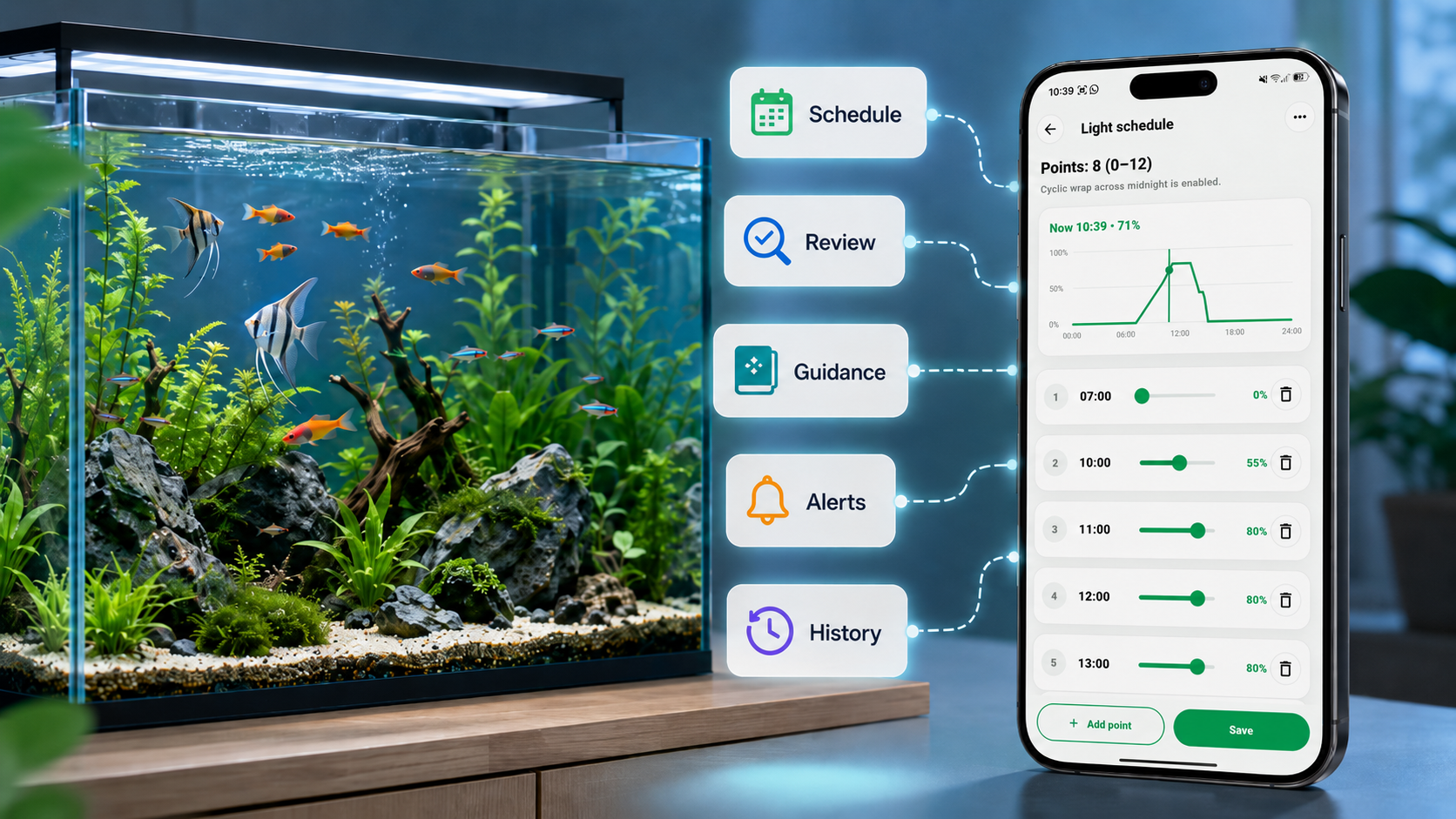
Aquarium light schedule management
How to start with aquarium control app?
| Criterion | Core Evaluation Question | AquaMaestro Design Standard |
|---|---|---|
| Visibility | Can I see what is scheduled without guessing? | Unified schedule dashboard for heating and lighting |
| Clarity | Can I understand the routine in plain language? | Straightforward status indicators without cryptic codes |
| Context | Does it relate to my tank, not a generic dashboard only? | Species & Plant Guidance tailored to your livestock |
| Keeper Control | Do I approve sensitive changes before they happen? | Sensitive adjustments require explicit keeper approval |
| Growth | Will it still help if the tank becomes more demanding? | Smooth hardware upgrade path from Lite to Plus & Pro |
Where Jollyfish AquaMaestro fits
Jollyfish AquaMaestro is a smart aquarium controller and app. With AquaMaestro Lite you get app-based heating and lighting schedules, a temperature sensor included with the controller, and species-and-plant guidance you can review.
Keeper in control: Guidance is for review - not a promise that the system runs the aquarium for you
Connected care: Designed to keep daily routines visible and simple to manage
No forced complexity: Start with what matters today and scale modularly over time
If you are still deciding whether you need a controller at all, read Smart Aquarium Controller vs Plug Timer. If your main friction is lighting consistency, see How to Build a Better Aquarium Lighting Schedule.