
A better aquarium lighting schedule is clearer, more repeatable, and easier to review - not simply longer or stronger.
Start with a daily photoperiod* window you can reliably maintain. Observe how your aquarium responds over several weeks, and change only one variable at a time. In aquarium care, consistency almost always delivers better results than constant tinkering.
*photoperiod = lighting schedule
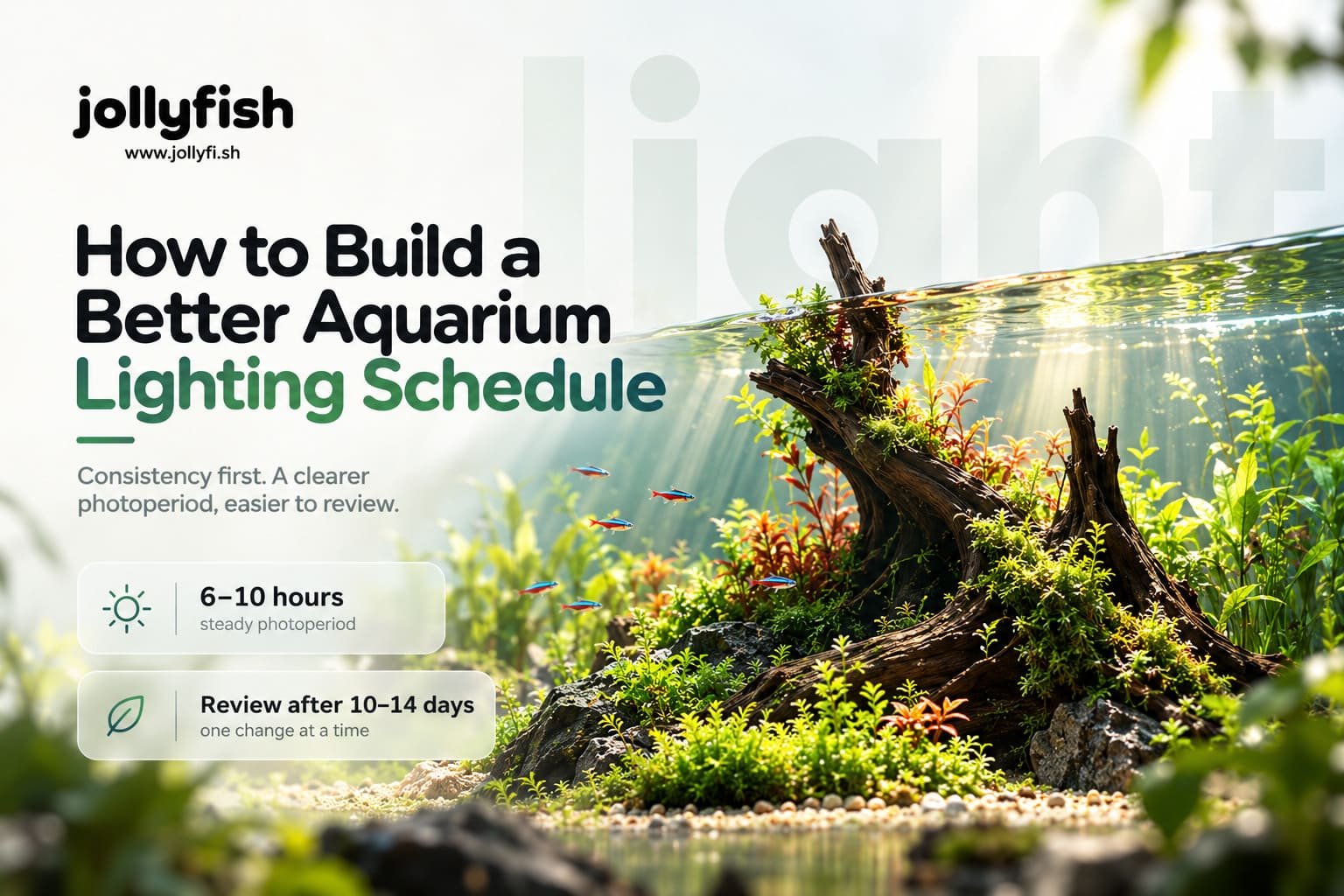
How long should aquarium lights actually be on?
Many freshwater community tanks thrive on roughly 6 to 10 hours of light per day. Planted aquariums are generally planned around a stable photoperiod within a similar band, fine-tuned to plant biomass, CO₂ availability, and nutrient dosing. There is no single universal number: match the schedule to your specific tank and stabilise it before altering intensity or duration.
(Practical hobby starting point: always observe fish behaviour, plant response, and algae before large changes.)
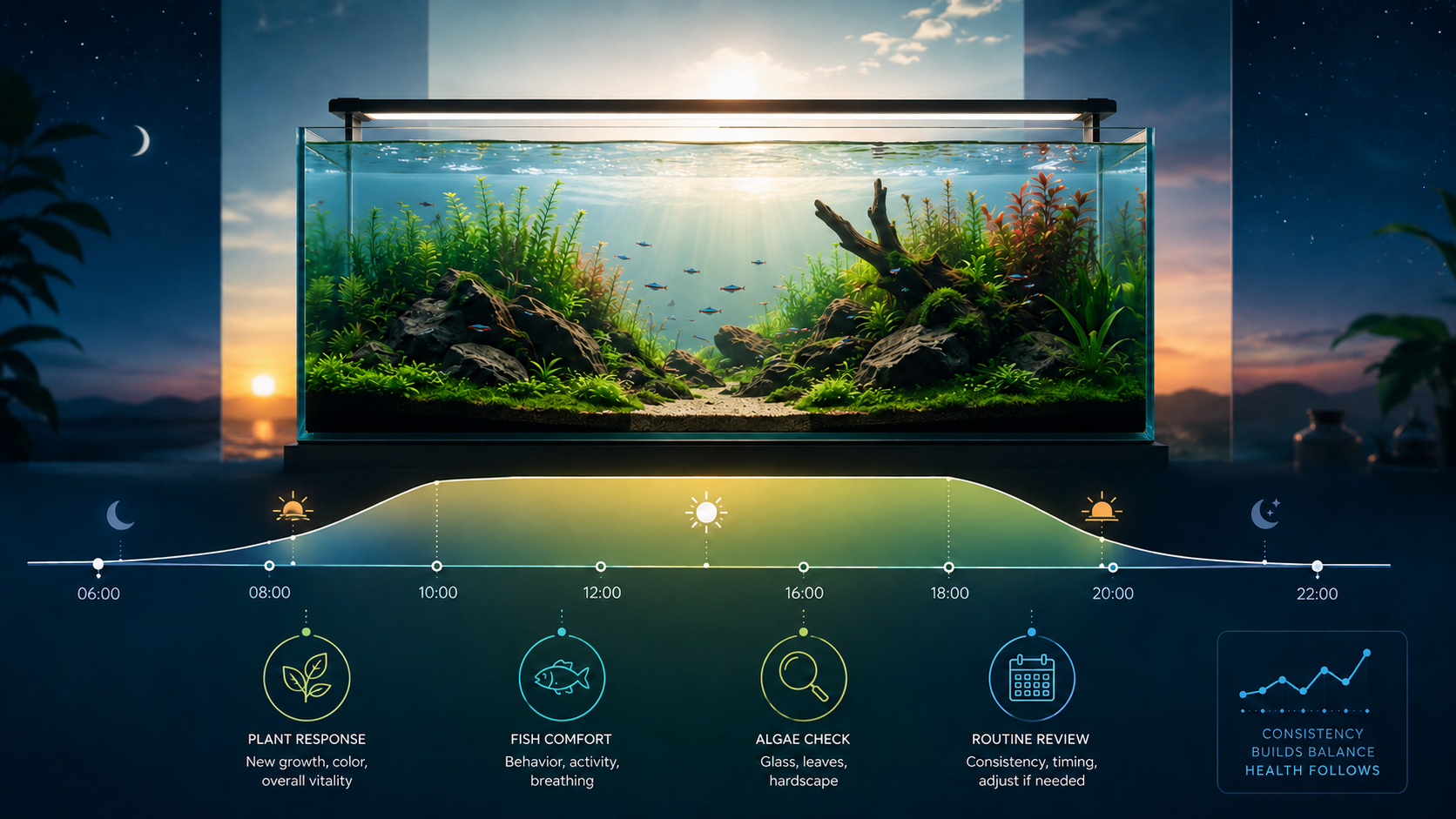
Aquarium lighting and plant care schedule
Why “better” lighting is not simply “more” lighting
Many keepers treat lighting as a single setting: pick hours, set a timer, and hope the tank responds. In reality, lighting often reveals inconsistency elsewhere - unstable timing, routines that do not line up, or demand the rest of the system cannot support.
Three Common Mistakes to Avoid
Treating schedule as one number: Hours matter, but so do on-time, off-time, and daily consistency
Using light to fix everything: Extra light drives carbon and nutrient demand, fueling algae if unbalanced
Unrealistic timing: If the timing clashes with viewing hours, you will override it and break consistency
Interactive Worksheet: Plan your lighting schedule
Use this reference framework to design and track your photoperiod before adjusting settings:
| Schedule Component | Configuration Recommendation | Husbandry Purpose |
|---|---|---|
| Lights On Window | Consistent daily starting time | Prefer a time you can maintain daily without disruption |
| Lights Off Window | Strict nightly cutoff | Avoid stretching photoperiod only because tank looks lit |
| Total Photoperiod | 6 – 10 Hours (Steady band) | Keep stable for 14 days before making any adjustment |
| Variable Rule | One change at a time | Do not alter hours, intensity, and fertiliser together |
| Observation Window | Evaluate after 10–14 days | Inspect fish comfort, leaf vitality, and algae emergence |
How to build the routine in practice
Step 1: Choose a realistic daily window that matches your viewing schedule
Step 2: Keep it consistent long enough to observe changes honestly
Step 3: Ask whether fish are calm, plants are thriving, or if the tank feels strained
When a smart controller elevates your lighting schedule
A plug timer can run a schedule. A connected app can make that schedule visible, easier to keep consistent, and easier to review.
With AquaMaestro Lite, you can set and review heating and lighting schedules from one app (temperature sensor included with the controller). For planted setups, coordination with CO₂ and nutrients matters more - see Coordinating CO₂, Nutrients and Lighting in a Planted Aquarium.